
The Digital Front Door to the Financial Markets
In the high-stakes world of online trading, technology is no longer just a support function; it is the product itself. For any modern brokerage or proprietary trading firm, the trading platform serves as the primary interface between the client and the market. It is the first thing clients see and the main interface they use daily. Consequently, choosing the right trading platform for forex brokers is arguably one of the most important strategic decisions a business leader will make.
The landscape of financial trading has shifted dramatically over the last decade. We have moved from an era of manual dealing desks and phone-based execution to an environment where every millisecond matters. Traders today expect tight spreads, fast execution, and reliable fills across multiple asset classes. If a platform lags, glitches, or fails to provide the data a trader needs instantly, the trust is broken. In this industry, trust is the currency that converts into higher volumes and longer client lifetime value.
This comprehensive guide serves as the definitive blueprint for brokers and prop firms looking to build or upgrade their trading infrastructure. We will dissect the anatomy of a successful platform, exploring not just the visual front-end, but the invisible engine of bridge technology, the lifeblood of liquidity, and the shield of risk analysis that keeps the business running.
Chapter 1: The Anatomy of Modern Trader Expectations
To understand what platform technology you need, you must first understand who you are serving. The profile of the retail and professional trader has evolved. They are more educated, more demanding, and less forgiving of technical failures than ever before.
1.1 The Need for Speed and Precision
The most fundamental requirement for any trading platform is execution quality. In today’s forex and CFD markets, speed is not a luxury; it is a necessity. Traders operate in an environment where price movements happen in microseconds. They expect tight spreads and reliable fills, even during volatile conditions.
When a trader clicks “buy,” they assume the price they see is the price they get. However, behind that smooth front-end experience sits a complex chain of events. If the platform feels sluggish or if there is a perceptible delay between the click and the confirmation, the trader perceives this as “slippage” or manipulation. For a broker, ensuring that the platform interface is synchronized perfectly with the matching engine is critical to preventing customer complaints and churn.
1.2 Cross-Device Accessibility: The “Anywhere” Standard
Gone are the days when trading was confined to a multi-monitor setup in a home office. Today’s traders demand cross-device access, expecting a seamless transition between web, desktop, and mobile environments.
A typical user journey might look like this:
- Morning: The trader performs deep technical analysis on a desktop application (like MT4 or MT5), utilizing custom indicators and robust charting tools.
- Commute: They monitor open positions via a mobile app while on the train.
- Work: They quickly manage orders or check balances via a web trader that requires no installation.
If your brokerage only excels in one of these areas but fails in another (e.g., a great desktop app but a clunky mobile experience), you create friction. A modern platform ecosystem must offer a consistent UX across all these touchpoints.
1.3 The Multi-Asset Mandate
Specialization is becoming rarer. Traders are increasingly looking for a “one-stop shop” where they can trade a variety of instruments. As a brokerage grows, the complexity of its infrastructure increases, often requiring the addition of new asset classes like indices, commodities, or cryptocurrencies.
A platform that only supports Forex is at a competitive disadvantage. Prop firms, in particular, need to offer popular forex pairs, indices, metals, and crypto to attract a broad range of talent. The platform must be capable of handling the different specifications of these assets—for instance, the 24/7 nature of crypto versus the session-based trading of indices—without confusing the user.
1.4 Frictionless Administration
Finally, the platform is not just for trading; it is for account management. Traders expect easy deposits, withdrawals, and account settings management. If a user has to leave the platform and log into a separate, disconnected client portal just to change their leverage or add funds, the experience is broken. The best platform solutions integrate these administrative functions directly or connect seamlessly to a CRM to reduce manual work and lower error risk.
Chapter 2: Strategic Architecture – White Label, Proprietary, and Prop Firm Tech
Once you understand the user, you must decide how to build the house. There are generally three paths for brokers and prop firms: White Labels, Proprietary builds, and specialized Prop Firm solutions.
2.1 White Label Solution: Speed to Market
For the vast majority of new and mid-sized brokers, building a platform from scratch is cost-prohibitive and time-consuming. This is where “White Label” solutions dominate.
Many brokers and prop firms rely on a white label trading platform to accelerate their launch. A white label is essentially a lease on an existing, proven technology stack (like MetaTrader 4 or 5) that is branded with your company’s logo and legal details.
The advantages of a White Label include:
- A Full-Featured Front End: Your clients get a professional-grade interface under your brand immediately.
- Backend Connectivity: These solutions usually come pre-wired with back-end connectivity to exchanges, liquidity providers, and CRMs, saving months of integration work.
- Integrated Modules: Essential tools like risk management and reporting modules are often included.
However, “White Label” does not mean “Set and Forget.” Even with a white label, you need expert support to ensure server installation, configuration, and optimization are handled correctly.

2.2 The Rise of Specialized Prop Firm Platforms
Proprietary Trading Firms (Prop Firms) operate on a different business model than retail brokers. They are not soliciting deposits; they are selling evaluations (challenges) and funding successful traders. Consequently, their platform needs are unique.
For prop firms, a standard retail platform often lacks the necessary gamification and tracking tools. A tailored prop firm trading platform can integrate evaluation dashboards, leaderboards, and account scaling rules directly into the trading experience.
Key features of Prop Tech include:
- Real-Time Rule Tracking: Prop traders need to know instantly if they are approaching their daily drawdown limits. The platform must display these metrics clearly to prevent accidental rule breaches.
- Simulated Environments: Prop firms often simulate market conditions for demo/evaluation phases. The platform must be able to switch between simulated feeds for evaluations and real multi-asset liquidity solutions for funded accounts.
- Evaluation Sustainability: With the right solutions, evaluation models stay sustainable, and funded traders enjoy high-quality execution.
2.3 Managing Global Complexity and Compliance
As your brokerage scales, you may face the challenge of operating in multiple jurisdictions. You might have an entity in Europe regulated by ESMA, and an offshore entity with different leverage rules.
If you serve clients across multiple regions, you may require US-compliant trading platform options alongside platforms designed for other jurisdictions. Strong platform partners help you meet regional regulatory requirements and segment clients by jurisdiction.
This segmentation is critical. This ensures that a client in a strict regulatory environment is automatically routed to a server that enforces lower leverage and negative balance protection, while a professional client elsewhere accesses different conditions. The platform must handle this logic automatically to maintain a consistent UX while adjusting leverage or product scope.
2.4 The Central Role of MT4 and MT5
Despite the rise of new web-based platforms, MetaTrader remains one of the most widely used trading platforms for retail forex and CFD traders. Many brokers rely on MT4 and MT5 as their primary client interface.
Because these platforms are the industry standard, they are the “backbone” of modern brokerage. However, their ubiquity means that simply having MT4 is not a competitive advantage. The advantage comes from how well you support and optimize it.
Keeping these platforms running smoothly requires expert MT4 support services for brokers and MT5 support for prop firms. This includes ongoing server management, monitoring, and the installation of updates for risk management and bridge plugins. When you invest in high-quality platform support, your internal team doesn’t need to be expert coders or infrastructure engineers; they can focus on sales, compliance, and client relationships.
Chapter 3: The Engine Room – Connectivity and Bridges
If the trading platform is the “front door” and the “dashboard” for the client, the Bridge is the invisible engine that drives every single interaction. Most traders never see your bridge technology, but they feel it every day. They feel it in the speed of execution, the accuracy of the price, and the stability of the connection during news events.
3.1 What is Bridge Technology?
At its core, bridge technology connects your trading platforms to your liquidity providers (LPs) and venues. It acts as the critical middleware that sits between your front-end (like MT4, MT5, or proprietary platforms) and the external market.
Without a robust liquidity bridge solution, even the most beautiful platform will struggle with slippage, re-quotes, and unhappy clients. The bridge performs three essential functions in real-time:
- Route Orders: It takes the client’s trade request and sends it to the appropriate destination.
- Aggregates Prices: It pulls raw data from banks and exchanges and refines it into a usable stream.
- Synchronizes Risk: It ensures that your internal risk management systems match your external market exposure.
3.2 How the Process Works in Milliseconds
The mechanics of a trade are complex but instantaneous. When a client places a trade on your platform, the order routing bridge system sends that order to the appropriate LP or internalizes it based on your risk model.
Simultaneously, the bridge is constantly pulling in price feeds from multiple LPs, aggregating them into a single “best bid/ask” stream, and pushing that stream back to your traders. This entire process happens in milliseconds, and that tiny window of time is the difference between a satisfying execution and a customer complaint.
3.3 Handling Complexity and Scale
As a brokerage grows, the complexity of its infrastructure increases. You may begin to add more liquidity providers to deepen your pool, or expand to new asset classes like indices, commodities, or cryptocurrencies.
A modern forex bridge tech provider helps you handle this complexity without constant manual intervention. It allows you to offer multiple account types and execution models—such as A-book (STP), B-book (Market Maker), or a hybrid of both—simultaneously on the same platform.
Key features to look for in bridge connectivity include:
- Smart Routing Logic: You should be able to configure execution paths per client segment or symbol. For example, a high-volume VIP trader might be routed directly to a Tier-1 bank feed, while a micro-account trader is internalized.
- Failover and Redundancy: If one LP goes down, the bridge should automatically switch to another so your core trading infrastructure remains stable.
- Latency Optimization: The bridge must be optimized for low latency and built on resilient infrastructure to ensure the fastest possible fills.
Chapter 4: Fueling the Platform – Liquidity Solutions
If the Bridge is the pipe, Liquidity is the water flowing through it. In competitive trading markets, your spreads and execution quality define your brand. To offer both, you need strong relationships with forex liquidity providers for brokers and the technology to connect to them efficiently.
4.1 Defining “Deep Liquidity”
“Deep liquidity” is a term often used in marketing, but technically, it means you can consistently offer two things:
- Competitive Bid/Ask Spreads: The difference between the buy and sell price is small.
- Volume at Price: There is meaningful available volume at each price level, ensuring large orders don’t slip significantly.
By working with a mix of bank, non-bank LPs, and exchanges, brokers build an institutional liquidity pool that supports all client segments. This results in fast, reliable execution under normal and volatile conditions.
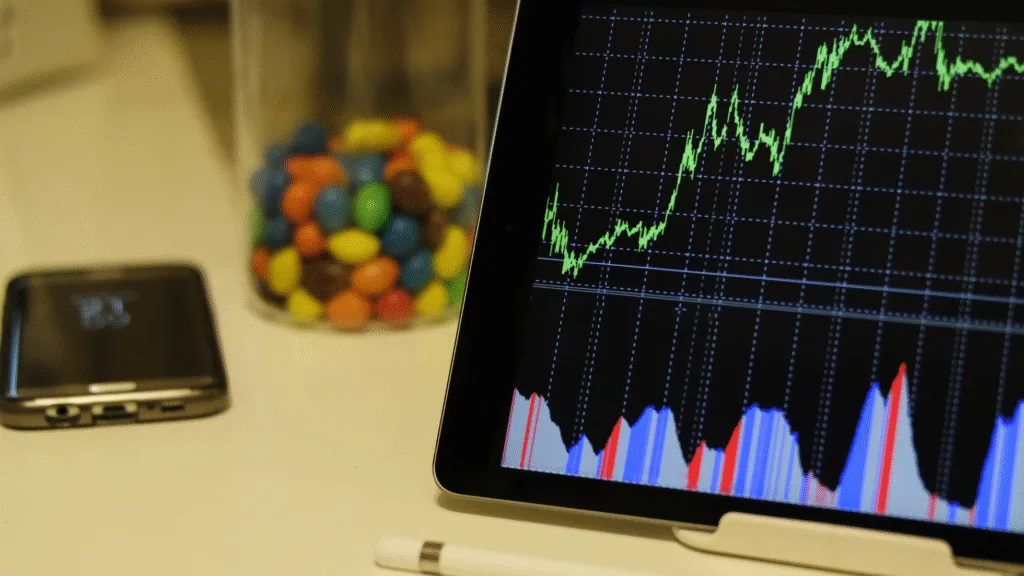
4.2 The Role of Liquidity Aggregation
Modern liquidity infrastructure revolves around liquidity aggregation technology. It is not enough to simply connect to one bank. Aggregation technology pulls prices and volumes from multiple LPs, ranks them, and combines them into a single best stream.
For brokers focused on STP/ECN liquidity, this aggregation is critical. It helps you reduce slippage, minimize re-quotes, and deliver the kind of execution that serious traders look for.
4.3 Liquidity Nuances for Prop Firms
Prop firms have unique needs compared to standard retail brokers. They may need to simulate market conditions for demo/evaluation phases while connecting to real multi-asset liquidity solutions for funded accounts.
A flexible liquidity setup allows prop firms to:
- Expand Assets: Offer popular forex pairs, indices, metals, and crypto to attract diverse trading talent.
- Manage Risk Profiles: Adjust margin and leverage profiles to match the strict risk rules of funding challenges.
- Defense: Protect themselves against asymmetric or toxic flows that often target prop firm valuation models.
With the right liquidity solutions for prop firms, evaluation models remain sustainable, and funded traders enjoy high-quality execution.
4.4 Connectivity as a Strategic Asset
Ultimately, platform connectivity solutions ensure smooth communication between trading platforms, risk engines, CRMs, and payment systems. This connectivity reduces manual work, lowers error risk, and gives your team a clear, unified view of the business.
When you combine a powerful Platform (Chapter 1 & 2) with a low-latency Bridge (Chapter 3) and Deep Liquidity (Chapter 4), you create a trading environment that builds trust. Trust converts into higher volumes, more referrals, and longer client lifetime value.
Chapter 5: Protecting the Business – Risk Analysis
Turning Data into Defense
In the early days of a brokerage, growth is the only metric that seems to matter. But as you scale, retention of profits becomes just as critical as acquisition of clients. Your trading platform gathers immense amounts of data every second. Using that data to protect the brokerage is the job of the risk engine.
Today’s brokers and prop firms face a constant wave of challenges: sophisticated trading strategies, copy trading networks, and automated bots. Without advanced risk analysis for forex brokers, these factors can quietly damage your P&L.
5.1 Understanding Modern Trading Threats
The risks go far beyond simple market exposure to one currency pair. A modern platform ecosystem must watch for specific predatory behaviors:
- Toxic Flow & Latency Arbitrage: Some traders use specialized software to identify “stale” prices on your platform and trade against them before your system updates. This is known as latency arbitrage. Effective risk tools detect this by measuring execution times and price differentials.
- Bonus Abuse & Fraud: This includes identifying account collusion (where one account loses to another on purpose) or bonus arbitrage. Risk engines identify suspicious IP clusters, device fingerprints, and login patterns to flag these networks.
- Copy Trading Risk: When many accounts follow a single master trader, a single large trade can inadvertently create massive, one-directional exposure for the broker. Copy trading risk controls help monitor these aggregated positions.
5.2 Tools for Real-Time Defense
You cannot rely on end-of-day reports to manage these risks. A modern risk engine helps you monitor these patterns in real time.
Effective prop firm risk management software and broker risk tools provide:
- Alerts: Immediate notifications for abnormal win rates, sudden volume spikes, or heavy one-directional exposure.
- Consolidated Dashboards: A “God’s Eye View” that consolidates exposure by symbol, client group, and execution venue.
With real-time trading risk analytics, dealing desks move from reacting after a loss to preventing the loss in the first place. This protection allows you to offer more flexible conditions to good clients because you are confident in your ability to catch the bad ones.
Chapter 6: Stability and Support
Ensuring the Platform Never Sleeps
The final piece of the platform puzzle is maintenance. MetaTrader (MT4 & MT5) remains the backbone of the retail trading ecosystem. However, software is not static. It requires constant tuning.
6.1 The High Cost of Downtime
Traders demand a seamless experience: fast logins, stable sessions, and consistent pricing feeds. When any part of that chain breaks, your support tickets explode.
- For Brokers: Downtime means lost revenue and damaged reputation.
- For Prop Firms: Technical glitches can unfairly fail a trader’s evaluation, leading to disputes and refunds.
6.2 What Professional Support Includes
Many brokers make the mistake of assuming their sales team can handle technical support. In reality, keeping these platforms running smoothly requires expert MT4 support services for brokers and MT5 support for prop firms.
A comprehensive support package typically covers:
- Server Health: Ongoing MetaTrader server management, monitoring, and optimization.
- Plugin Management: Installation and updates for risk management, reporting, and bridge plugins.
- Troubleshooting: Rapid resolution of order routing, symbol configuration, and connectivity issues.
By partnering with a specialist in MT4 & MT5 support, your internal team doesn’t need to be expert coders or infrastructure engineers. Instead, they can focus on sales, compliance, and client relationships, knowing the foundation is stable.
Conclusion: Transforming Technology into a Growth Engine
The trading platform is often viewed as a cost center—a necessary expense to do business. But as this guide has outlined, it is your primary growth engine.
Your platform is the Front Door, bridge is the Invisible Engine, Liquidity is the Fuel, and the risk management is your shield.
When these four components are synchronized, the results are tangible. Faster fills and tighter spreads create trust. That trust converts into higher volumes, more referrals, and longer client lifetime value.
Whether you are a startup brokerage choosing a White Label or an established Prop Firm optimizing your proprietary stack, the strategy remains the same: Invest in infrastructure that scales.
By combining a user-friendly interface with deep liquidity, smart bridging, and vigilant risk analysis, you transform your brokerage from “just another platform” into a trusted trading venue that serious traders prefer. Visit Tradex Fintech for more information.