
Launching a highly profitable financial enterprise requires an unshakeable technological foundation. A beautiful brand identity cannot survive poor server execution, security breaches, or constant downtime. Therefore, evaluating white-label providers is the most critical strategic decision your executive team will make. This choice dictates your operational costs, your execution speed, and ultimately, your firm’s survival.
This premium leasing model allows ambitious financial enterprises to bypass immense technical barriers. However, the marketplace is crowded with vendors offering vastly different levels of performance. In this comprehensive guide, we will break down the precise mechanics of this evaluation process. You will learn how to secure institutional-grade technology, manage risk, and scale your brand rapidly in a highly competitive digital landscape.
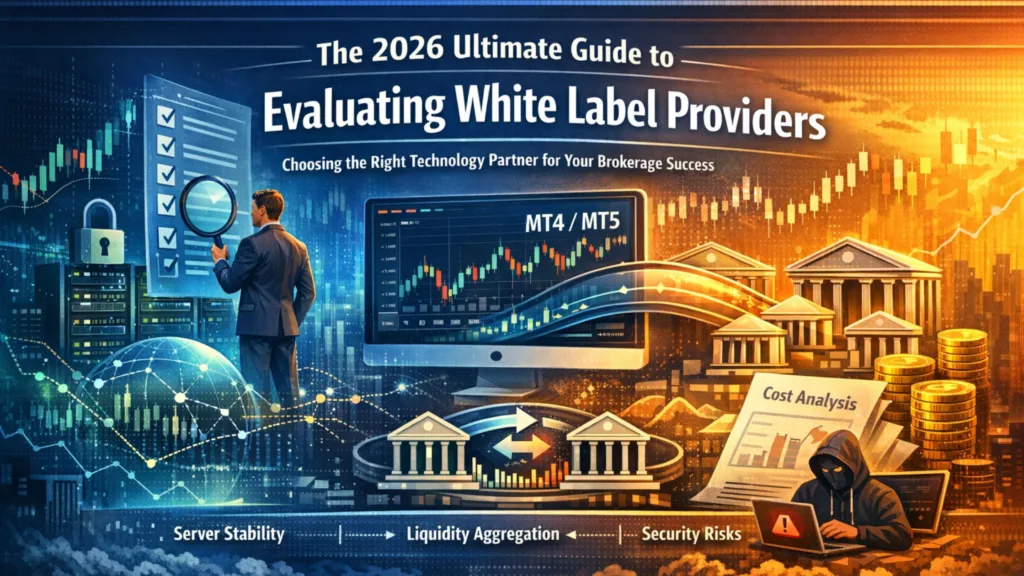
Why the Evaluation Phase Dictates Your Success
Before committing capital to a technology partner, you must understand the gravity of this strategic relationship. A white-label arrangement is a highly efficient operational partnership. The enterprise technology provider leases a segment of its existing, robust trading infrastructure to your new firm.
This division of labor is the defining advantage of a turnkey setup. The technology provider handles the complex backend server maintenance. Meanwhile, your internal executive team dedicates its entire budget to client acquisition and retention. However, if the underlying technology fails, your marketing efforts are entirely wasted.
The Cost of a Poor Technical Partnership
Many industry experts suggest that underestimating the importance of infrastructure is the leading cause of early brokerage failure. When evaluating white-label providers, you must look beyond flashy marketing materials and scrutinize their backend architecture.
If you partner with a subpar provider, your brokerage will suffer from:
- Severe Slippage: Millisecond server delays cause trades to execute at incorrect prices, destroying client profitability.
- Catastrophic Downtime: Platform crashes during peak trading hours instantly ruin a brokerage’s reputation.
- Security Breaches: Weak infrastructure leaves your clients’ funds and personal data vulnerable to cyberattacks.
According to a comprehensive report by IBM regarding enterprise security, the average cost of a financial data breach exceeds millions of dollars, often crippling new firms entirely IBM – Cost of a Data Breach Report.
Analyzing Core Enterprise Infrastructure
Not all infrastructure providers deliver true institutional performance. You must ruthlessly evaluate the backend technology powering your prospective platform. A low-latency environment is entirely non-negotiable for modern currency traders.
When establishing your evaluation criteria, prioritize the following core infrastructure metrics above all else.
Server Stability and Execution Speed
Your trading platform requires an elite environment to function properly. Premium technology partners utilize highly secure, dedicated financial servers located physically near major global exchanges (such as Equinix data centers in London or New York).
This physical proximity guarantees ultra-fast execution speeds. You must demand proof of 99.9% uptime and robust Distributed Denial of Service (DDoS) protection protocols before signing any service level agreement.
Seamless Liquidity Aggregation
A powerful, secure trading terminal is useless without access to deep market liquidity. Your technology partner must supply sophisticated bridge middleware. This critical software routes your clients’ trades directly to tier-1 banks and global market makers.
Effective liquidity aggregation ensures your traders experience tight spreads and rapid fill rates, even during volatile news events. For a deeper dive into how this middleware impacts your daily operations, review our targeted guide on selecting the forex white-label providers that prioritize bridge stability.

The Financial Reality: Analyzing Your Setup Costs
Financial predictability is vital for a growing enterprise. You must thoroughly understand the pricing structure before committing to a technology partner. A transparent vendor shifts your heavy technology expenses from unpredictable Capital Expenditures (CapEx) to manageable Operational Expenses (OpEx).
Capital vs. Operational Expenses
Building proprietary trading software requires millions of dollars in upfront CapEx. Conversely, leasing a turnkey setup requires a much smaller initial integration fee, followed by predictable monthly OpEx retainers.
However, you must be vigilant during the contract review phase. As we discussed in our detailed breakdown of the true white-label forex broker cost, hidden fees can quickly drain your operational runway.
Recognizing Predatory Pricing Models
Use this framework to evaluate the financial proposals from prospective technology partners:
| Pricing Component | Enterprise Standard (Acceptable) | Predatory Red Flags (Avoid) |
| Initial Integration | A flat, clearly defined fee covering all server setup and branding. | A low baseline price with massive upcharges for basic logo integration. |
| Server Hosting | A fixed monthly retainer for dedicated, secure financial servers. | Variable costs based on shared, highly unstable server usage. |
| Trading Volume Fees | Scalable licensing costs that only increase as your firm generates more revenue. | Uncapped penalty rates if you unexpectedly exceed specific trading thresholds. |
| Back-Office Plugins | Essential CRM and risk management tools are included in the base package. | Exorbitant monthly integration fees for every essential compliance tool. |
Trading Terminals: Delivering the Industry Standard
Retail and institutional traders demand familiarity, reliability, and advanced analytical tools. The client-facing interface is the heart of your operation, and it must perform flawlessly.
The Power of MT4 and MT5
MetaQuotes platforms remain the undisputed gold standard for digital trading globally. Therefore, when evaluating white-label providers, you must partner with a vendor that specializes in these specific terminals.
- The Conversion Advantage: Millions of traders globally have already purchased or developed proprietary Expert Advisors (EAs) specifically for MetaTrader. If you force these high-volume traders to use an unfamiliar, proprietary platform, they simply will not convert.
Providing industry-standard software signals immediate trust to your prospective clients. To fully grasp the immense operational benefits of these specific platforms, explore our dedicated breakdown of securing a premium MetaTrader white-label setup.
Back-Office and Regulatory Compliance Tools
A successful financial firm requires a powerful, integrated backend system. Modern turnkey setups must feature comprehensive back-office capabilities. Without these tools, your internal team will drown in manual data entry, compliance reporting, and operational chaos.
Advanced CRM and Client Management
Your chosen provider must supply a fully integrated Customer Relationship Management (CRM) system. This technology empowers your sales team to manage the entire client lifecycle effortlessly.
When your CRM communicates flawlessly with your trading platform and your liquidity bridge, your entire operation scales smoothly. A premium CRM allows your team to:
- Track high-value institutional leads from initial contact to conversion.
- Manage complex, multi-tiered affiliate and Introducing Broker (IB) networks.
- Process client deposits and withdrawals with automated security checks.
Dealing Desk and Risk Management
Protecting your dealing desk is vital for long-term survival. Brokerages are highly vulnerable to toxic trading flow. High-frequency trading (HFT) abusers and latency arbitrageurs exploit microsecond server delays to drain your capital.
You need automated surveillance tools that identify, flag, and block these threats in real-time. The best enterprise technology partners include these proactive risk management protections automatically within their back-office suite.
Furthermore, financial authorities worldwide require strict adherence to anti-money laundering (AML) protocols. Top-tier regulators, such as the Financial Conduct Authority (FCA), demand rigorous reporting FCA Official Website – Regulatory Frameworks. A premium provider supplies the automated tools necessary to meet these strict compliance standards.

A Proven Step-by-Step Evaluation Framework
To ensure a successful partnership, we recommend following a highly structured, sequential evaluation plan. Do not rush this process. Identifying the best white-label forex broker solution requires systematic diligence.
Step 1: Define Your Target Market
Determine if you are targeting retail traders, institutional clients, or automated algorithmic traders. Your target audience dictates whether you need MT4, MT5, or direct FIX API connectivity.
Step 2: Request Technical Demonstrations
Never buy software based purely on a brochure. Demand live demonstrations of both the client-facing trading terminal and the back-office manager systems. Verify that the interface is intuitive and responsive.
Step 3: Conduct Latency and Execution Tests
Request a trial environment to test the execution speed of the platform. Place trades during peak market hours to ensure the bridge technology does not suffer from severe latency or slippage.
Step 4: Scrutinize the Service Level Agreement (SLA)
Send the proposed contract to your legal team. Ensure the SLA includes strict guarantees for 99.9% server uptime, clear protocols for data breach remediation, and a highly transparent fee structure.
Step 5: Verify Technical Support Infrastructure
The financial markets operate around the clock, and your technical support must do the same. Verify that the provider offers 24/7 dedicated assistance. You require a dedicated account manager, not an automated, unresponsive ticketing system.
Conclusion: Securing Your Enterprise Future
In summary, thoroughly evaluating white-label providers is the most strategic, secure, and vital step in launching a new financial firm. This premium leasing strategy provides immediate access to elite trading technology, drastically lowers your initial startup costs, and mitigates long-term operational risks.
By prioritizing ultra-fast server execution, deep liquidity aggregation, financial transparency, and robust back-office support, your brokerage can enter the competitive financial market with absolute confidence.
Are you ready to accelerate your timeline and secure enterprise-grade infrastructure? Avoid the pitfalls of subpar technology and partner with industry leaders. Contact the expert infrastructure team at TradeX Fintech today to schedule your customized enterprise technology consultation. Let us provide the secure hosting, ultra-fast execution, and robust support you need to dominate the digital era.